
- icrceconf@126.com
- +86-132-9000-0003
Special Session
Special Session: Support Structures for Offshore Wind Energy Systems
Related Topics for this Session: Bottom-fixed Foundations, Floating Offshore Wind Turbines (FOWTs), Mooring Systems, Hydrodynamics, and related topics.
Short description of the proposed topic: Securing offshore wind turbines, both bottom-fixed and floating types, is both challenging and expensive. The design of support structures therefore plays a vital role to host the offshore wind turbines. The soil-anchor interaction becomes important for bottom-fixed support structures whereas the platform dynamics along with mooring systems becomes important for floating support structures.
Novelty and motivation: Offshore wind energy is one of the front runners in the ocean renewables market. Support structures are a critical part of offshore wind energy systems—they transfer loads from the turbine (wind, waves, currents, ice, earthquakes) to the seabed while ensuring long-term stability and cost efficiency. The choice of bottom-fixed or floating support structure depends mainly on water depth, seabed conditions, turbine size, and environmental loads. To address these challenges, a holistic design methodology is essential and this session is dedicated to advancing the knowledge regarding the support structures.
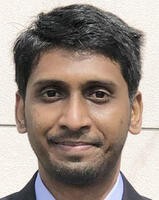
Dr. Sharath Srinivasamurthy, Saga University, Japan
Dr. Sharath Srinivasamurthy is currently working as an Assistant Professor in the Faculty of Science and Engineering, Institute of Ocean Energy, Saga University, Japan since 2021. He is an expert in the field of stability of floating platforms and substructures for offshore wind energy.
His research interests include Floating offshore wind turbines, ocean renewable energy, safety and reliability of offshore structures, and related fields. He has worked on various projects funded by JSPS (Japan Society for the Promotion of Science), NEDO (New Energy and Industrial Technology Development Organization), and METI (Japan's Ministry of Economy, Trade and Industry). Currently, he is a recipient of prestigious JSPS Kakenhi (Grants-in-Aid for Scientific Research in Japan).
We welcome interdisciplinary contributions from operations research, industrial engineering, economics, statistics and policy science are looking forward to sharing your outstanding research outcomes.
1, submit it via the link: http://confsys.iconf.org/submission/icrce2027 (after entering the link, click on the corresponding topic)
2, send your manuscript to icrceconf@126.comm with subject "Submit+Special Session-1+Paper Title".